
Quick answer. Reconstituting a peptide means adding a measured liquid to a freeze-dried powder so it dissolves. First check the exact product instructions for the right liquid, amount, mixing method and storage. Then record the final solution volume. Divide the amount of peptide in the vial by that final volume to find the concentration. A calculator can check this arithmetic, but it cannot tell you whether a product or preparation is safe to use.
Scope: This is an educational guide to lab preparation and concentration math. It is not a home injection guide or a dose recommendation. If you have a prescribed medicine, follow its own package instructions and your pharmacists advice. A product sold for research does not become an approved medicine when water is added.
What does reconstituting a peptide mean?
Some peptides arrive as a dry, freeze-dried material. Reconstitution puts that material back into a liquid. The liquid is called a diluent. The result is a solution, provided the material dissolves fully. The amount of peptide in the vial stays the same when you add liquid; its concentration changes. For instance, the same 5 mg vial mixed to 1 mL has twice the concentration of that vial mixed to 2 mL. That is a statement about arithmetic, not an instruction to use either volume.
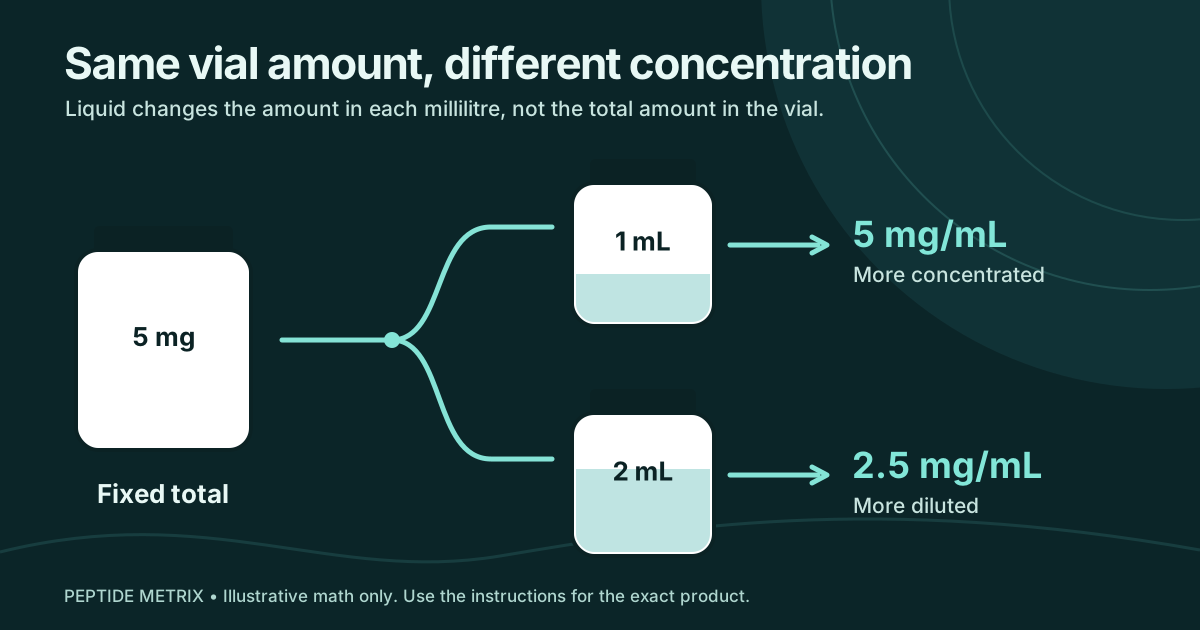
Image 1: Adding more compatible liquid changes concentration. It does not add more peptide.
Check these four things before you begin
| Check | Why it matters |
|---|---|
| Product identity and vial label | The stated amount must be correct for the concentration calculation. A calculator cannot verify what is inside a vial. |
| Product-specific instructions | The makers directions determine the diluent, volume, mixing method and storage. These can differ between products. |
| Diluent label | Confirm the exact name and ingredients. Bacteriostatic water, preservative-free sterile water and saline are different preparations. |
| Vial size and final volume | Check that the chosen amount fits, and use final solution volume for precise math if it differs from the liquid added. |
If the product has no trustworthy preparation or stability instructions, do not invent them from a generic mixing chart. Ask a qualified pharmacist or the product manufacturer. A clear solution alone cannot confirm identity, potency or sterility.
Which liquid should you use?
There is no liquid that works for every peptide. For a medicine, the product label takes priority. Even when a diluent can dissolve a powder, its ingredients may be incompatible with a particular drug. Pfizer bacteriostatic water label explicitly directs users to the drug manufacturers instructions for the vehicle and volume, and says not to store a mixed drug unless its manufacturer directs it. Research suppliers may specify different buffers for different peptide sequences.
| Liquid | What the label tells you | What to remember |
|---|---|---|
| Bacteriostatic Water for Injection | A sterile water product with benzyl alcohol as a preservative. Pfizer lists 0.9% or 1.1%, depending on the presentation. | A preservative slows microbial growth; it cannot make a contaminated preparation sterile or establish the peptides shelf life. Do not assume it is compatible with your product. |
| Sterile Water for Injection | Sterile water without a bacteriostatic preservative. | Follow the medicine instructions. Do not assume a single-dose container can be saved for later use. |
| Saline or another specified solvent | A different composition that a particular product or lab protocol may require. | Use it only when the product-specific instructions call for it. Do not substitute based on a general blog post. |
A note on “BAC water”: This common shorthand means bacteriostatic water, but read the actual label. Ordinary drinking water and tap water are not substitutes for a labelled sterile diluent.
How the preparation process works
For an approved injectable medicine, use its package directions and a trained professional instructions. The sequence below explains the checks in plain English; exact handling, timing and storage remain product specific. NHS pharmacy guidance warns that manipulating an injectable container can introduce contamination.
- Read the product directions. Confirm the diluent, amount, container and any time limit before opening anything.
- Set up a clean preparation area. Use suitable sterile equipment and clean technique according to the applicable product or lab procedure. Do not reuse a needle or syringe.
- Measure the specified liquid. Check the syringe or pipette scale and the vial capacity. Record the measured amount.
- Add the liquid as directed. Follow the product directions for how quickly to add it and whether to swirl or otherwise mix. Do not rely on a blanket “always shake” or “never shake” rule: products differ.
- Check the result. Compare its appearance with the instructions. Unexpected particles, precipitation or discoloration need further review; do not assume that a clear liquid proves safety.
- Label and store it as directed. Record the product, concentration, preparation date and applicable discard date. Use the maker storage and in-use directions rather than a general peptide timeline.
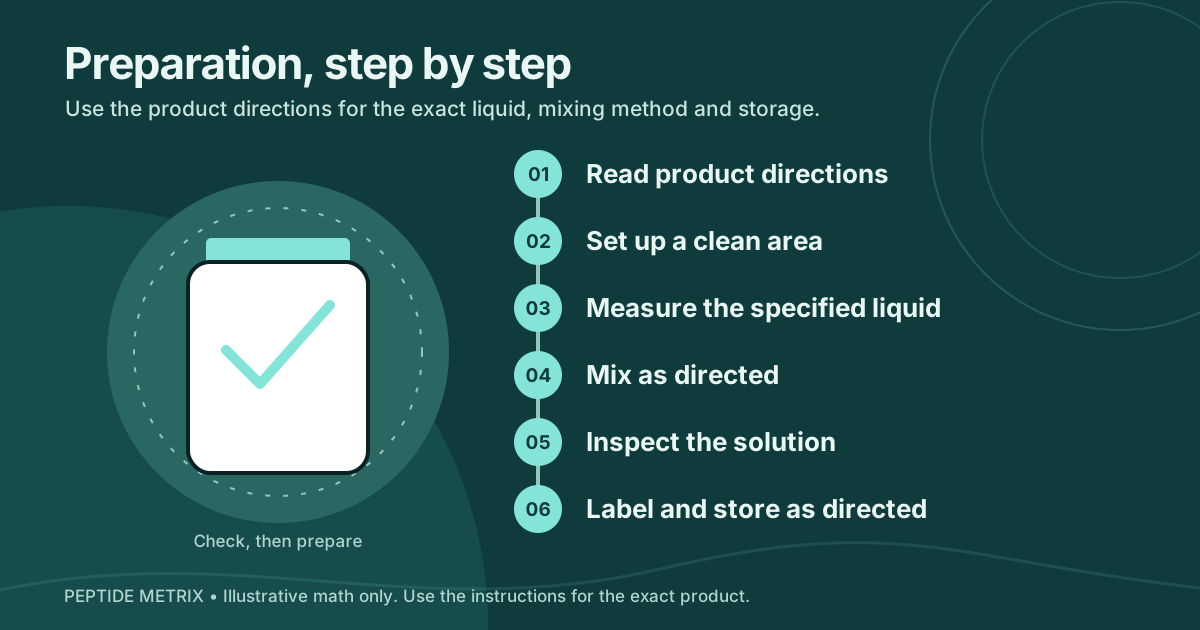
Image 2: A preparation checklist. The product instructions control the details at every stage.
How much liquid should you add?
Start with the amount and final concentration specified by the product or laboratory protocol. There is no universal “1 mL per 5 mg” rule. Adding more compatible liquid lowers the concentration; adding less raises it. The number on the vial stays the same. Check the container capacity and the peptides solubility before using any planned volume.
The concentration formula
Concentration (mg/mL) = total peptide in the vial (mg) ÷ final solution volume (mL).
To convert milligrams to micrograms, multiply by 1,000: 1 mg = 1,000 mcg. If the dissolved powder changes the final volume enough to matter, use the measured final volume instead of treating the amount of liquid added as exact. Peptide Metrix uses the water input as an estimate of final volume unless you enter the final volume there.
Here is one arithmetic example only, with no suggested medicine or dose:
| Given or calculated | Value |
|---|---|
| Amount stated on vial | 5 mg |
| Assumed final solution volume | 2 mL |
| Concentration | 5 mg ÷ 2 mL = 2.5 mg/mL |
| Amount in 0.1 mL | 0.25 mg, or 250 mcg |
| 0.1 mL on a U-100 scale | 10 units |
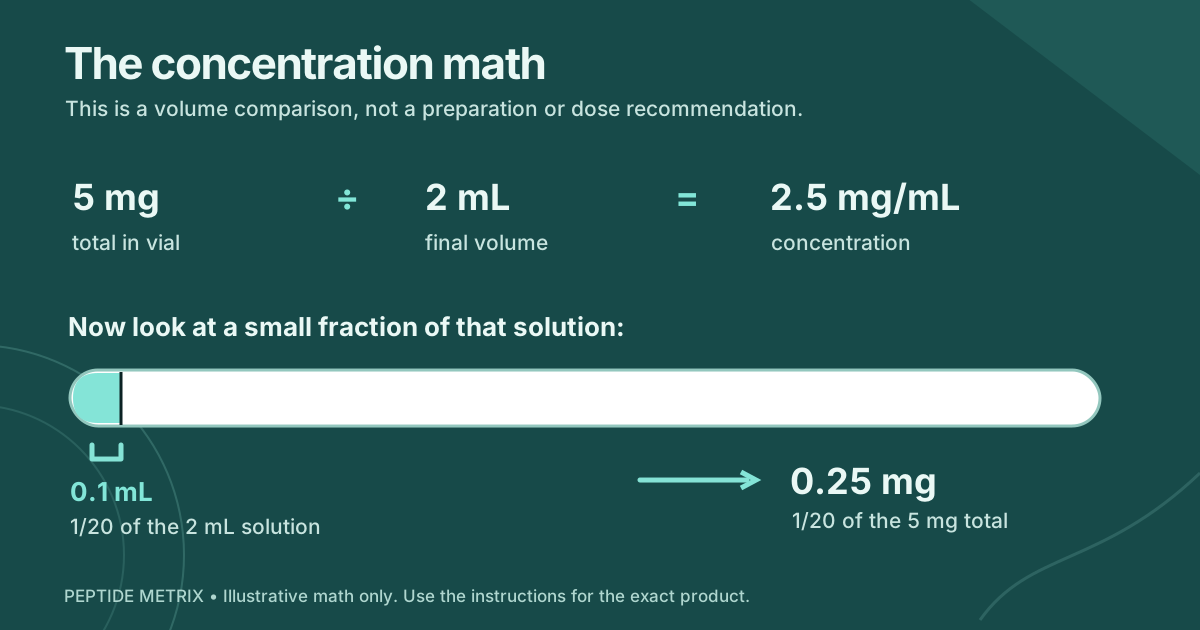
Image 3: A worked conversion, not a suggested preparation or dose.
What do “units” mean on a syringe?
On a U-100 syringe, 100 printed units equal 1 mL of volume. Therefore 10 units equal 0.1 mL. Those markings do not mean 10 mg, 10 mcg or 10 international units of a peptide. A U-40 or U-500 scale is different, and some syringes show mL instead. Check the markings on the device you actually have. The FDA has documented serious errors caused by confusing milligrams, millilitres and syringe units in compounded injectable products.
Syringe markings by scale
Units are markings on a syringe. They show a volume of liquid, not a fixed amount of peptide. The volume depends on the scale printed on the syringe.
| Syringe scale | Markings in 1 mL | Volume at 1 unit | Volume at 10 units |
|---|---|---|---|
| U-100 | 100 units | 0.01 mL | 0.1 mL |
| U-40 | 40 units | 0.025 mL | 0.25 mL |
| U-500 | 500 units | 0.002 mL | 0.02 mL |
| mL scale | Uses mL markings | Not applicable | Not applicable |
Example: On a U-100 syringe, 10 units equals 0.1 mL. The peptide amount in that liquid depends on its concentration. Always match the calculator setting to the scale printed on your actual syringe.
How long does a mixed peptide last?
There is no single answer for all peptides. Chemical stability depends on the particular substance, solvent, concentration, container and storage conditions. Contamination risk is a separate question. The CDC general rule for an opened multidose vial is to date it and discard it within 28 days unless the manufacturer specifies a different period. That rule does not prove that every peptide mixed with bacteriostatic water stays potent or safe for 28 days. Pfizer diluent label says not to store a reconstituted drug unless the drug manufacturer directs it.
| Question | Where to get the answer |
|---|---|
| Is this peptide stable after mixing? | Product-specific stability data or qualified manufacturer guidance. |
| How should it be stored? | The exact medicine label or verified lab protocol; do not assume all solutions need the same temperature. |
| When should the mixed product be discarded? | The product in-use instructions and applicable professional guidance. The opened diluent vial and the mixed product can have different limits. |
Common mistakes to avoid
- Treating every peptide alike. Solubility and stability vary. Check the exact product.
- Assuming “BAC water” guarantees 28 days. Its preservative is not a stability test for the peptide.
- Confusing vial amount with concentration. “5 mg in the vial” and “5 mg/mL” mean different things.
- Reading syringe units as peptide mass. A unit mark describes volume only after you identify the scale.
- Using a generic chart as medical instructions. Charts cannot establish a prescribed amount, product quality or suitable preparation method.
- Trusting appearance alone. Check unexpected particles or color changes, but remember that clear liquid can still have an unknown identity or contamination.
Frequently asked questions
Can I use bacteriostatic water for every peptide?
No. Follow the specific medicine label or validated laboratory instructions. Some compounds need a different solvent, and benzyl alcohol may be unsuitable for particular products or patients. Pfizer label says bacteriostatic water containing benzyl alcohol must not be used in neonates.
Is bacteriostatic water the same as sterile water?
No. Bacteriostatic water has an added preservative; preservative-free sterile water does not. Their labels and intended handling differ. Check the full product name before using either.
Does more water mean more peptide?
No. Adding water changes the amount of peptide per mL, not the total amount already in the vial.
Does the calculator tell me how much water to add or how much to take?
No. It converts the values you enter and checks some arithmetic and capacity limits. The product instructions or qualified clinician must supply the preparation directions and any prescribed amount.
Can I keep every reconstituted peptide for 28 days in a refrigerator?
No. The 28-day guidance for opened multidose vials cannot establish the stability of every reconstituted peptide. Follow the exact product in-use and storage instructions.
What if the solution looks cloudy or has particles?
Compare it with the product expected appearance and seek qualified guidance. Do not assume a cloudy or visibly changed solution is suitable for use.
Key point
Reconstitution is more than getting powder to dissolve. The right liquid and handling come from the specific product instructions; concentration comes from the vial amount divided by final liquid volume. Keep those two decisions separate, and use the calculator only to check the numbers.